DLU Academy4 min read
Why body language matters at work
Much of what we communicate isn’t said out loud. Simple habits that change how colleagues and clients read you.
By the DLU Editorial Team
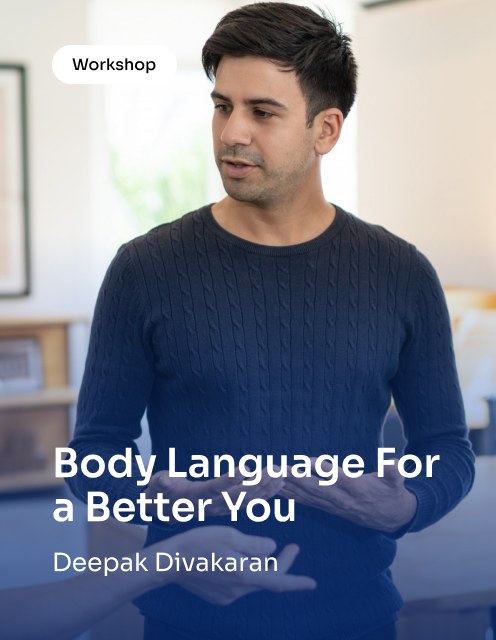
You can prepare the perfect words for a meeting and still lose the room, whether that room is an office or a video call. People read posture, eye contact, gestures and tone long before they process what you say, and they form impressions quickly.
What your body is saying
Crossed arms can read as defensive, even when you are simply cold. Looking at your phone signals that the conversation isn’t your priority. Fidgeting can make a confident idea sound uncertain. None of these mean you are doing something wrong; they mean your body and your words are telling different stories.
Five habits that change how you’re read
- Stand and sit tall, with your shoulders relaxed rather than raised
- Hold eye contact for a few seconds at a time, then look away naturally
- Keep your hands visible and use open gestures when you explain
- Nod and lean in slightly to show you are listening
- Pause before answering instead of rushing to fill silence
Reading others
Body language works both ways. Notice when a colleague’s posture closes, when a client stops making eye contact, or when energy drops in a room. These cues tell you when to slow down, ask a question or change your approach.
Body language across cultures
In international teams, the same gesture can mean different things. Direct eye contact signals confidence in some cultures and can feel too intense in others, and personal space and greetings vary too. When you work across borders, watch how others behave, match their level of formality and, if in doubt, ask.
On camera
On video calls, your body language is squeezed into a small frame. Sit square to the camera at eye level, keep your hands in view when you explain, look at the lens when you make a key point and nod so people can see you’re listening.
Practice makes it natural
The goal isn’t to perform. It is to make sure your body supports your message. Short, practical training helps you notice your habits and build better ones until they feel natural. That is exactly what DLU Academy’s Body Language at the Workplace workshop is designed to do, live online, wherever you work.